
Why an off-grid cabin works on your own
A cabin is one of the few places where being on your own is the whole point. There is nobody to check in with and no timetable, just the fire, the weather and whatever you feel like doing next. In winter, when it gets dark in the late afternoon, the evenings become the best part of the day.

People go for different reasons. Some want to switch off their phone and see how it feels. Some want to write, draw or finally read the pile of books by the bed. Others simply want a few days of walking, eating well and sleeping deeply. If you like the idea of company within reach, many cabins sit on small farms or estates with a host nearby; if you want total solitude, there are places down tracks where you will not see anyone at all.
Just the fire, the weather and whatever you feel like doing next.
From this guide
Things to consider
Off-grid stays vary more than almost any other kind of trip, from a shepherd’s hut in a farmer’s field to a cottage at the end of a forestry track. These are the choices that shape the experience most when you are going alone.
Budget
Cabins and cottages are usually priced for the whole place, so the cost is the same whether you go alone or bring a friend. That makes small places your friend: a hut or one-bedroom cottage is often far better value for one than a larger cottage. Think about what you are paying for. Is it the setting, the design of the place, or extras like a hot tub? And remember to budget for food, as most off-grid stays are self-catering. Our three bands are based on the cost of one night.
Many cabins have a minimum stay of two or three nights at weekends, but allow shorter midweek stays in winter. Worth checking if you only want a night or two.
How remote to go
Remote cabins in England and Wales range from a field away from a village to miles from the nearest road. It is worth being honest with yourself about how much quiet you want. Do you picture walking to a pub for dinner, or not seeing another person for three days? Would no phone signal feel like freedom, or would you rather have a bar or two for peace of mind?
- If you wantcomplete solitudeYou may preferA cabin at the end of a track, deep in a forest or on a hillside, with no neighbours in sight.
- If you wantquiet with a safety netYou may preferA hut or cabin on a small farm or estate, where the host lives nearby.
- If you wanta pub within walking distanceYou may preferA cottage on the edge of a village, so you can walk to dinner and back.
- If you wanta view more than isolationYou may preferA cabin above a valley or coast, where the scenery does the work.


Type of stay
The word cabin covers a lot. A shepherd’s hut is snug and simple, often a bed, a stove and a small kitchen in one room. A cabin or lodge usually has more space and a proper bathroom. A cottage gives you thick walls, a sofa by the fire and a kitchen to cook in. Think about how much room you want to move around in, and how you feel about a shower in a separate hut or a compost loo.
- If you wantsomething snug and simpleYou may preferA shepherd’s hut or small cabin, where everything is within arm’s reach of the stove.
- If you wantroom to spread outYou may preferA cottage or lodge with a separate bedroom and a sofa by the fire.
- If you wanta bit of luxuryYou may preferA designed cabin with a hot tub, sauna or big windows facing the view.
- If you wanthistoryYou may preferAn old stone cottage, barn or chapel with log fires and thick walls.
Keeping warm and the basics
In winter, heat matters more than anything else in a cabin. Many cottages with wood burners use them as the main heating, which is lovely if you enjoy tending a fire and less so if you arrive tired at night to a cold room. Some places have heating that comes on before you arrive, and some are truly off-grid, with solar power, limited hot water and no electric sockets. It is worth knowing which you are booking.
- If you wantto tend a real fireYou may preferA cabin or cottage with a wood burner or open log fire, and logs included.
- If you wantwarmth without effortYou may preferA place with central or underfloor heating as well as a stove.
- If you wantto really unplugYou may preferA truly off-grid stay with solar power and no wifi, as long as you are happy with a torch and a book.
- If you wantto stay connectedYou may preferA cabin with wifi or reliable signal, even if you plan to switch off most of the time.
Getting there and supplies
Remote places can be harder to reach in winter. Tracks can be muddy or icy, and the last few miles may be on single-track lanes with no lighting. Think about whether you will drive, and how you feel about doing those last miles after dark. If you are coming by train, some hosts can meet you at the station or arrange a taxi, and a few cabins are a short walk from a rural station. Food is the other thing to plan, as the nearest shop may be a drive away.
- If you wantnot to driveYou may preferA cabin near a station or bus route, or a host who offers pick-ups.
- If you wantan easy arrivalYou may preferSomewhere with a lit path and parking by the door.
- If you wantnot to shop on arrivalYou may preferA stay that offers a breakfast hamper or meals, or a village shop nearby.
- If you wantto cook properlyYou may preferA cabin with a full kitchen and an oven, not just a hob.
A typical day in a cabin on your own
Days in a cabin take on their own rhythm, set by the light and the fire. Some people walk for hours; others barely leave the sofa. Here is how a slow winter day might go, to give you an idea of what to plan for.
- MorningLight the stove, make coffee, and watch the frost lift from the window.
- Late morningA walk from the door while the light is good.
- AfternoonBack for lunch, then a book, a nap or a long bath.
- DuskBring in the logs and get the fire going before dark.
- EveningCook something slow, then the stove, a film or the stars.
What to look for
A few practical things make the difference between a cabin that feels cosy and one that feels like hard work in winter. Most of these are in the listing, or can be checked with a quick message to the host.
- Logs included, or easy to buySo you can keep the fire going all evening.
- Heating as well as a stoveWorth having for cold mornings and late arrivals.
- A proper bed and good beddingWinter nights in a cabin can be cold.
- A host nearbyUseful if you want someone to call on.
- Clear directions for the last mileRemote places can be hard to find in the dark.
- A walk from the doorSo you can get out without getting in the car.
Phone signal in remote cabins can be patchy. If you need to be reachable, ask the host which network works best, or whether there is wifi.
Tips for a cabin trip alone
- Arrive before darkFinding a cabin and lighting the fire is easier with a little daylight.
- Bring a head torchPaths, log stores and outside loos are much easier with your hands free.
- Shop before the last townBring supplies for the whole stay in case the nearest shop is closed.
- Download maps and filmsIf signal is patchy, offline maps and something to watch can be useful.
- Tell someone where you areShare the address and your rough plans, especially if there is no signal.
- Pack layers and slippersCabins warm up quickly by the fire but floors can be cold.
Our recommended off-grid cabins and cottages
These are the cabins and cottages we would book for a winter break alone. Each one comes from our list of independent stays, with notes on why it suits a solo stay and anything worth knowing, such as how remote it is and how it is heated.
Some links earn us a small commission. It never changes which stays we pick or what you pay.
-
 On our list£££Mid-range
Llangollen Shepherds Huts
Near Llangollen, Denbighshire- A hillside hut with its own hot tub above the Dee valley
- A stove and its own kitchen, with Llangollen a short drive away
Trade-off: we have not confirmed winter opening dates, so check before you plan.
See the stayPrices vary by date -
 On our list£££Budget
Caban Bryn Arw
Forest Coal Pit, near Abergavenny, Monmouthshire- A snug hut with a wood burner below the Sugar Loaf
- Walks up the hill straight from the door, and WiFi if you want it
See the stayPrices vary by date -
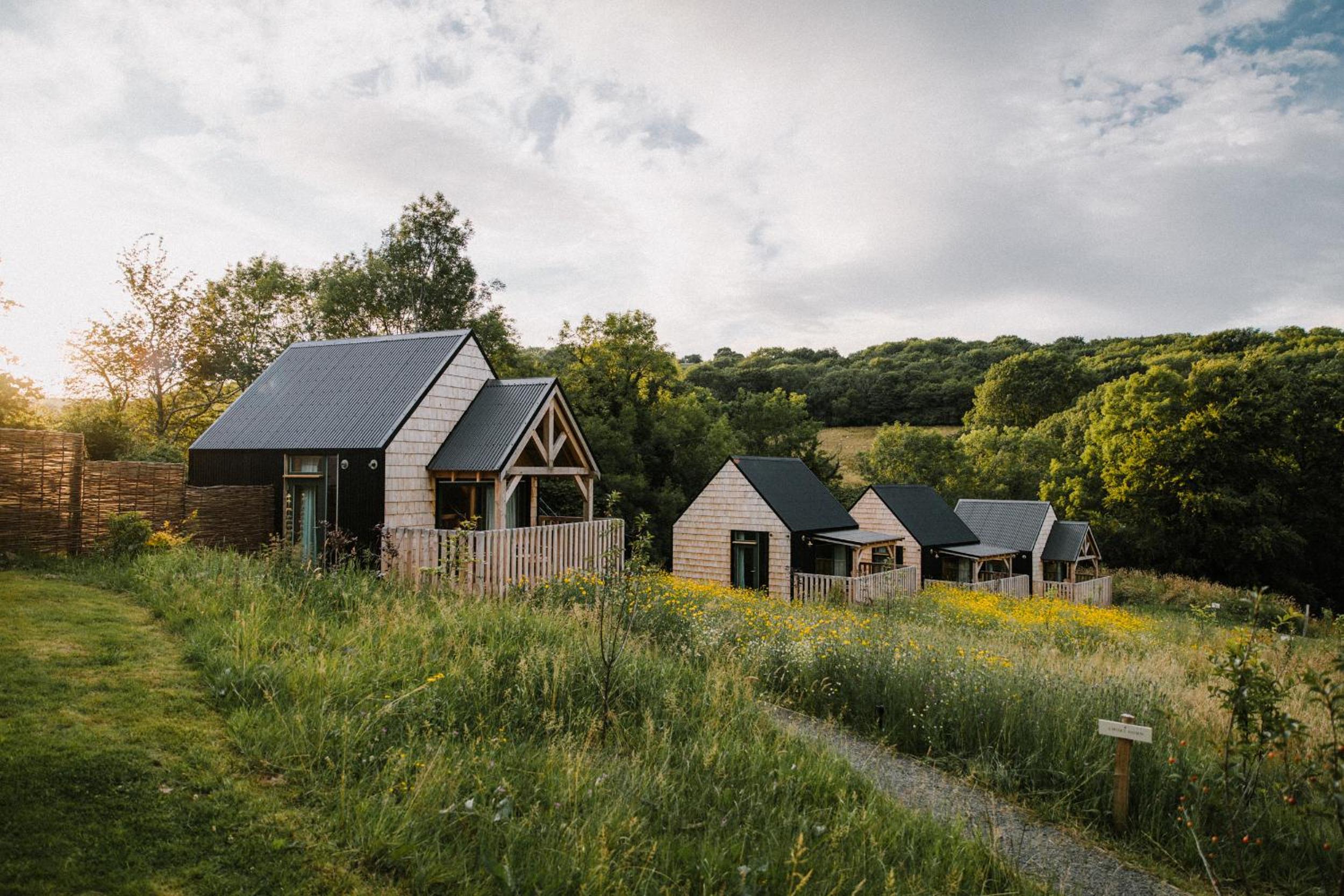 On our list£££Treat yourself
Wild Cabins at The Bull's Head
Craswall, Herefordshire- Cabins with a sauna beside a drovers’ pub under the Black Hill
- Offa’s Dyke and the Black Mountains on the doorstep
Trade-off: check-in is Wednesday to Saturday and the pub keeps limited hours, so bring food for quieter nights.
See the stayPrices vary by date -
 On our list£££Mid-range
Hedgehope at Huts in the Hills
Whittingham, Northumberland- A bath on the veranda and a wood burner in the Cheviot foothills
- No wifi, but 4G, and some of the darkest skies in England
Trade-off: a generator hum is likely in winter, and it is adults only.
See the stayPrices vary by date -
 On our list£££Mid-range
Woodman's Hut, Stonebeck Gate Farm
Danby, North Yorkshire- Truly off-grid, with a wood-fired tub and a stove in its own moorland field
- The farm hosts live nearby
Trade-off: there is no phone signal at all, so plan to be offline.
See the stayPrices vary by date -
 On our list£££Mid-range
Rushford Shepherd's Hut
Chagford, Devon- A shepherd’s hut by the River Teign with a log burner and a skylight over the bed
- A riverside stroll to the pubs of Chagford
Trade-off: we have not confirmed winter opening dates, so check before you plan.
See the stayPrices vary by date
Cabins are usually priced for the whole place, so they can cost more for one than a room in an inn. Midweek and January are often cheaper, and smaller huts tend to be the best value.
How we chose these
Every stay in this guide comes from our list, and a person checks each one before it is marked Reviewed. For off-grid cabins we also check how the place is heated, how easy it is to reach in winter, and how far it is to the nearest food.
Each stay in our guides carries one of three badges, so you can see how far our checks have got:
- Hand-Picked: A stay we have personally vetted, or spoken to directly.
- Reviewed: A stay a person on our team has checked against all four criteria and approved.
- On our list: A stay we have researched and scored, still waiting to be checked by a person.
Not for you if…
You would rather someone else did the cooking and kept the fire going. A small hotel with a good lounge might suit you better.
Questions people ask
Is it safe to stay in a remote cabin on my own?
Most people find it relaxing with a little planning. Choose somewhere with a host nearby if you want someone close, check the road in for winter weather, and let someone know where you are.
Do cottages with wood burners provide logs?
Many include a starter basket and sell more on site. Some include all you need, and a few expect you to bring your own, so it is worth checking.
Is there phone signal in off-grid cabins?
It varies. Some have wifi, some have good signal, and some have none at all. Hosts can usually tell you which network works best.
Can I get to a remote cabin without a car?
Sometimes. A few cabins are near rural stations, and some hosts can arrange a pick-up. Check before you book, as buses can be limited in winter.
What is a truly off-grid cabin?
One that is not connected to mains power or water, often using solar panels, a wood stove for heat and spring water. Many cabins described as off-grid are simply remote, with normal electricity.
What should I bring?
Food for the stay, a head torch, warm layers, slippers and something to read. Check whether bedding and towels are included.


