
Why a first solo trip works so well
A first trip alone is about the same things as any trip: getting there, somewhere good to sleep and something you want to do. The difference is that every choice is yours, from the train you catch to the time you have dinner. That freedom is often the point.
How you approach it depends on you. If you want an easy start, a night or two in a city with a station and a staffed hotel keeps things simple. If you want something to aim for, a walking trip with a clear route gives the days a shape. If you want company, a hostel, a guided walk or an inn with a busy bar puts people around you.
Every choice is yours, from the train you catch to the time you have dinner.
From this guide
Things to consider
These are the habits that help a trip alone run smoothly, grouped by when you will need them. Take the ones that suit your trip, and follow the links for the full advice from the organisations that publish it.
Before you go
Most of the useful preparation happens before you leave home. Tell someone where you are staying and when you expect to be back, check the signal at your stay, and look up the last train or bus for any day out. If you would like help at the station, you can book that in advance too.
- If you wantto keep someone in the loopYou may preferA plans-to-share note, like the one below, sent to someone you trust.
- If you wantto know you can get onlineYou may preferOfcom’s coverage checker for your stay’s postcode, plus offline maps.
- If you wanthelp at stationsYou may preferPassenger Assistance, which you can book for help at stations and on trains. Transport for Wales explains how.
Cannot make voice calls? If you are Deaf, hard of hearing or speech-impaired, you can contact 999 by text once you have registered for emergencySMS. To register, text “register” to 999 and follow the replies. Relay UK explains the steps.
- Where I am stayingName, address and phone number
- My routeThe trains, buses or walk I plan to do
- Start and finishWhere I set off from and where I will end up
- Expected backThe time I expect to be back, or to check in
- Who to contactThe person who has this note, and what to do if they do not hear from me
Fill this in, print it or copy it into a message, and send it to someone you trust before you go.
On the way
Travelling by train or bus on your own is straightforward, and a few habits from the Suzy Lamplugh Trust make journeys smoother still, especially in the evening. Check the time of the last service, wait somewhere well lit with other people around, and keep your phone charged. On a train, sit in a carriage with other passengers, and if you would rather be somewhere else, move seat or carriage.
- If you wanta taxiYou may preferA licensed taxi or a booked minicab. Share the journey and vehicle details with someone you trust, ask to see the driver’s badge and check the vehicle displays a licence.
- If you wantto walkYou may preferWell-lit, busy streets and the route you know best. The Suzy Lamplugh Trust suggests looking at Street View before you set off to learn the landmarks.
- If you wantto report something on a trainYou may preferA text to British Transport Police on 61016, their non-emergency number.
Ask for Angela is a free scheme in many pubs, bars and other venues. Asking staff for “Angela” tells them you would like discreet support without having to explain, and they take their lead from you. Only participating venues take part.
On a walk
Walking alone is one of the great pleasures of a solo trip: your pace, your route, your stops. The Mountain Rescue advice published by Ordnance Survey notes that the risk is higher on your own, so it suggests sharing your route and expected finish time and sticking to them. AdventureSmart asks three questions before any outing: do I have the knowledge and skills, do I know what the weather will be, and do I have the right gear?
- If you wanta walk you can relax intoYou may preferA waymarked route at low level, such as a stretch of one of the National Trails, with a village or café along the way.
- If you wantto go highYou may preferThe Met Office mountain forecast, issued each afternoon before 6pm and updated before 6am, or the Mountain Weather Information Service.
- If you wantcompany on a walkYou may preferA guided walk or a walking group for the day, with a leader who knows the way.
- If you wantto roam freelyYou may preferThe Countryside Code: plan ahead, be ready to turn back, give livestock room and take your litter home.
Call 999, ask for Police, then Mountain Rescue, and give your location. If your phone has signal, the team can text you a link (SARLOC or PhoneFind) that sends back your position. If that does not work, give a grid reference or describe where you are (BMC). Mountain Rescue advice is not to move until you are contacted. To signal for help without a phone, give six long blasts on a whistle or flashes of a torch in a minute, pause for a minute, and repeat (Ordnance Survey).

At the coast
The coast out of season is lovely on your own, with wide beaches and clifftop paths. The RNLI advises checking tide times before you set out, because the tide can catch you out, and warns that cold water shock can leave you helpless in seconds. It also suggests keeping a charged phone, telling someone ashore your plans, and avoiding walking alone or at night.
- If you wanta beach walkYou may preferDaylight, tide times checked and a route you can leave easily.
- If you wanta swimYou may preferA lifeguarded beach, when lifeguards are on duty.
- If you wantan evening by the seaYou may preferA lit promenade or a harbour, rather than the beach or the cliff path.

At your stay
Where you stay can make a first trip much easier. A hotel with 24-hour reception means someone is always there if you need anything; a small guesthouse means hosts who know the area; food on site means one less thing to plan in the evening. Think about what would help you feel most settled, and look for that first.
- If you wantsomeone always on handYou may preferA hotel with 24-hour reception.
- If you wantlocal tipsYou may preferA host-run guesthouse or B&B.
- If you wantan easy eveningYou may preferA stay with a restaurant or room service.
- If you wantan easy arrivalYou may preferA stay close to the station, so you can walk from the train.
Your before you go checklist
Tick these off in the days before you travel. Print this page if you would like a paper copy.
- Plans sharedStay, route, start and finish, expected return and a contact.
- Signal checkedOfcom’s coverage checker for your stay and any walk.
- Offline maps downloadedAnd tickets saved to your phone.
- Last train or bus knownFor the journey home and any day out.
- First night bookedWith the stay’s phone number saved.
- Charger packedAnd a power bank for long days out.
- Walking high? Forecast checkedThe Met Office mountain forecast or MWIS.
- By the sea? Tides checkedBefore any beach or coast path walk.
- Cannot make voice calls? emergencySMS registeredText “register” to 999 before you go.
Tips for a first trip alone
- Start somewhere easy to reachA place with a station and a stay a short walk away keeps things simple.
- Book the first nightEven if the rest of the trip is open.
- Arrive in daylight if you canIt is easier to find your way on a first visit.
- Plan one thing a dayA walk, a gallery or a good dinner, with the rest left open.
- Keep your phone chargedA power bank helps on long days of maps and tickets.
- Note the stay’s numberSomewhere offline, in case your phone runs out.
Our recommended stays for a first trip
These are stays we would suggest for a first trip alone, in no particular order. Each is easy to reach by train, tram or Metro, and most have 24-hour reception or a restaurant on site. They come from our list of independent stays in England and Wales.
Some links earn us a small commission. It never changes which stays we pick or what you pay.
-
 On our list£££Mid-range
Jesmond Dene House
Newcastle upon Tyne, Tyne and Wear- A country house hotel in a wooded dene, with a restaurant, bar and room service
- 24-hour reception, and West Jesmond Metro station is walkable
See the stayPrices vary by date -
 On our list£££Budget
Carnson House
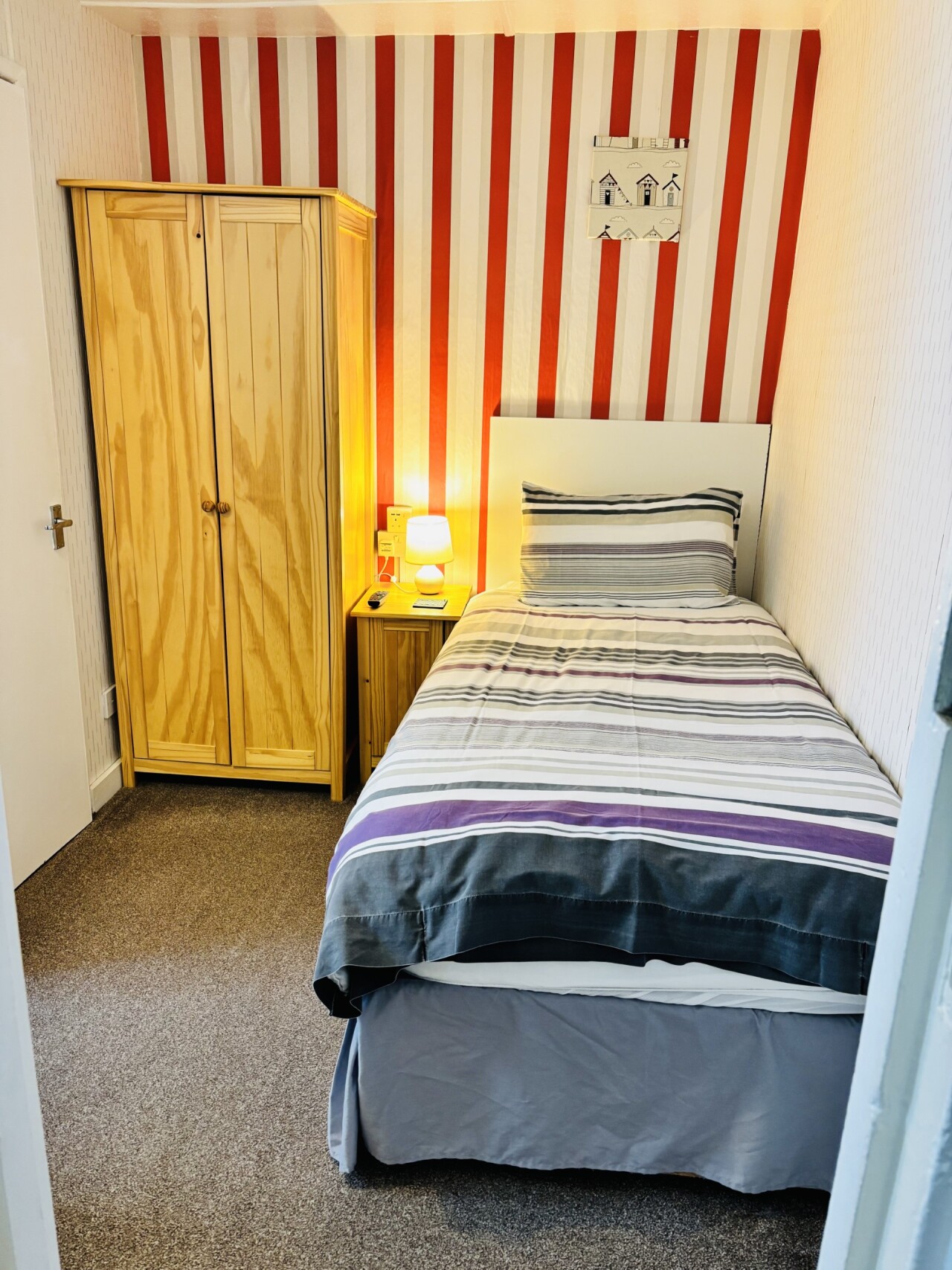
Penzance, Cornwall- A small, host-run B&B right opposite Penzance station
- Real single rooms and a cooked breakfast before you set off
Trade-off: check-in runs from 10am to 9pm and there is no evening meal on site.
See the stayPrices vary by date -
 On our list£££Budget
Llandudno Bay Hotel
Llandudno, Caernarfonshire- Several single room types, some facing the sea, with a restaurant, bar and room service
- 24-hour reception, about 15 minutes’ walk from Llandudno station
Trade-off: some back rooms overlook service areas, so ask for the front.
See the stayPrices vary by date -
 On our list£££Mid-range
Didsbury House
Didsbury, Manchester, Greater Manchester- A Victorian villa with lounges, a walled garden, a bar and room service
- 24-hour reception, about five minutes’ walk from the tram
Trade-off: it also hosts weddings, so check for events on your dates.
See the stayPrices vary by date -
 On our list£££Mid-range
Trefeddian Hotel
Aberdyfi, Merionethshire- A family hotel above the dunes with sea-view lounges, an indoor pool and single rooms
- 24-hour reception, about 15 minutes’ walk from Aberdovey station
Trade-off: it is popular with families in the school holidays.
See the stayPrices vary by date
Larger staffed hotels make arriving easy, but they can feel less personal than a small guesthouse. If you would like local tips, a host-run B&B may suit you better.
How we chose these
Every stay in this guide comes from our list, and a person checks each one before it is marked Reviewed. For a first trip we also looked for stays close to a station, with 24-hour reception, hosts on site or food on site.
Each stay in our guides carries one of three badges, so you can see how far our checks have got:
- Hand-Picked: A stay we have personally vetted, or spoken to directly.
- Reviewed: A stay a person on our team has checked against all four criteria and approved.
- On our list: A stay we have researched and scored, still waiting to be checked by a person.
Not for you if…
You have travelled alone before and want ideas rather than habits. Our guide to the best places for a solo trip starts with where to go.
Questions people ask
How do I travel alone for the first time?
Pick somewhere easy to reach, book the first night, share your plans with someone you trust, and check the signal and the last train or bus. Then leave plenty of the trip open for whatever you feel like doing.
What if I lose signal?
Download maps and tickets before you go and save your stay’s phone number somewhere offline. In the hills, a paper map needs no battery. If you are walking somewhere remote, share your route and expected finish time before you set off.
What do I do in an emergency on a walk?
Call 999, ask for Police, then Mountain Rescue, and give your location. Mountain Rescue advice is not to move until you are contacted. Without a phone, six long blasts on a whistle or flashes of a torch in a minute, repeated after a minute’s pause, signals for help.
Can I text 999?
If you are Deaf, hard of hearing or speech-impaired, yes, once you have registered for emergencySMS. To register, text “register” to 999 and follow the instructions. Do it before you travel.
Is it okay to ask a venue for help?
Yes. Many pubs, bars and other venues take part in Ask for Angela: asking for “Angela” tells staff you would like discreet support, and they take their lead from you. Only participating venues take part.
What are the most useful solo travel tips?
Choose somewhere with a station, stay close to it, plan one thing a day and keep your phone charged. The checklist on this page covers the rest.
Sources and useful links
We link to the organisations that publish the advice and facts on this page. Each link was last checked on 17 October 2026. Details can change, so check the source before you travel.
- Suzy Lamplugh Trust: transport safety
- Suzy Lamplugh Trust: personal safety out and about
- Ask for Angela: questions and answers
- Ordnance Survey: advice from Mountain Rescue
- British Mountaineering Council: what to do in a hill walking emergency
- Mountain Rescue England and Wales: how to call out Mountain Rescue
- AdventureSmart: three questions before you head out
- GOV.UK: The Countryside Code (Natural England)
- National Trails: long-distance paths in England and Wales
- Met Office: mountain forecast guide
- Mountain Weather Information Service
- RNLI: know the risks
- Ofcom: mobile coverage checker
- Transport for Wales: travel essentials (Advance tickets, Delay Repay, Passenger Assistance, fflecsi)
- Relay UK: contact 999 by text (emergencySMS) (for people who cannot make voice calls)


